

Two Decades That Transformed
Destination Marketing Forever
There was a time when destination marketing revolved around printed travel guides, visitor centers, trade shows, newspaper travel sections, and carefully planned advertising campaigns that took months to produce. A successful tourism initiative was measured by brochure requests, phone inquiries, seasonal occupancy increases, and the occasional feature in a national publication.
Websites existed, but they functioned more as digital brochures than living marketing ecosystems. Social media had not yet reshaped traveler behavior. Smartphones did not guide visitors through every moment of their journey. Artificial intelligence belonged more to science fiction than destination strategy.
And yet, even then, tourism marketers understood something powerful: destinations are built on emotion, storytelling, community pride, and the ability to inspire exploration. Twenty years later, the industry has transformed in ways few could have imagined.
Today’s travelers expect real-time information, mobile-first experiences, immersive video, instant recommendations, personalized itineraries, and immediate answers. Tourism organizations now operate in a world where travelers move seamlessly between Google searches, Instagram reels, TikTok videos, online reviews, AI-powered search tools, and digital maps before making decisions.
What once revolved around campaigns now revolves around ecosystems. And while the technology has changed dramatically, the mission remains the same: connecting people to places and creating meaningful experiences that strengthen communities, support local businesses, and inspire travel.
When Tourism Marketing Was Simpler — and More Personal
Twenty years ago, tourism marketing moved at a slower pace.
Visitors often discovered destinations through magazines, travel agents, AAA guides, state welcome centers, or recommendations from friends and family. Campaigns were seasonal, carefully planned, and far less dependent on instant results.
Many destination marketing organizations operated with smaller digital expectations and fewer technological demands. A tourism website might only require a handful of updates each year. Event listings were often manually entered. Business directories remained static for months at a time.
Yet there was something deeply personal about that era. Tourism professionals built relationships directly with journalists, group tour operators, meeting planners, and local stakeholders. Storytelling was slower, but often richer. Communities took enormous pride in representing their destinations through printed visitor guides, photography, and personal hospitality.
The industry was also far less measurable. Tourism organizations knew marketing was working when hotels filled, attractions stayed busy, and visitors returned. But the ability to directly track engagement, visitor behavior, conversions, and campaign performance simply did not exist at the level it does today.
That would soon change.

The Internet Changed How Travelers Discover Destinations
As internet access expanded in the early 2000s, traveler behavior changed rapidly.
Visitors no longer waited for printed guides to arrive in the mail. They expected immediate access to information. Search engines became central to trip planning. Travelers started researching destinations independently, comparing experiences online, reading reviews, and making decisions faster than ever before.
The tourism industry was forced to evolve. Destination websites transformed from static digital brochures into active marketing platforms. Organizations had to continuously update event calendars, attraction information, lodging details, and travel recommendations to meet growing expectations.
The rise of online bookings accelerated this shift even further. Today, more than 70% of travelers research and book trips online, while mobile devices now account for a substantial percentage of travel-related searches and bookings worldwide.
This evolution fundamentally changed the role of destination marketing organizations. Tourism marketing was no longer only about inspiration. It became equally focused on accessibility, discoverability, usability, and digital engagement. For the first time, destinations had to think not only about what they wanted to say, but also about how quickly, accurately, and consistently travelers could access information.
Social Media Turned Travelers Into Influencers
No single development transformed tourism marketing more dramatically than social media. Platforms such as Facebook, Instagram, YouTube, Pinterest, and TikTok completely changed how destinations are discovered and experienced.
For the first time in history, travelers themselves became marketers.
Every photograph, review, video, hashtag, and recommendation had the potential to influence thousands — and sometimes millions — of future visitors. Research from Phocuswright found that social media continues to play a major role in travel decision-making, particularly among younger travelers seeking authentic and visual experiences.
This shift created enormous opportunities for destinations of all sizes.
Small towns, rural communities, and emerging destinations suddenly had access to a global audience without requiring enormous advertising budgets. A single viral video or compelling social campaign could elevate a destination overnight. At the same time, tourism organizations lost some control over their narratives.
Travelers increasingly trusted peer-generated content more than polished advertising campaigns. Authenticity became more important than perfection. Visitors wanted to experience the real, local perspectives, hidden gems, and community personality.The tourism marketer’s role has evolved from simply promoting destinations to facilitating conversations, amplifying stakeholders, managing digital reputation, and helping communities tell their stories across multiple channels.


The Smartphone Became the Modern Visitor Center
The arrival of smartphones reshaped the visitor experience entirely.
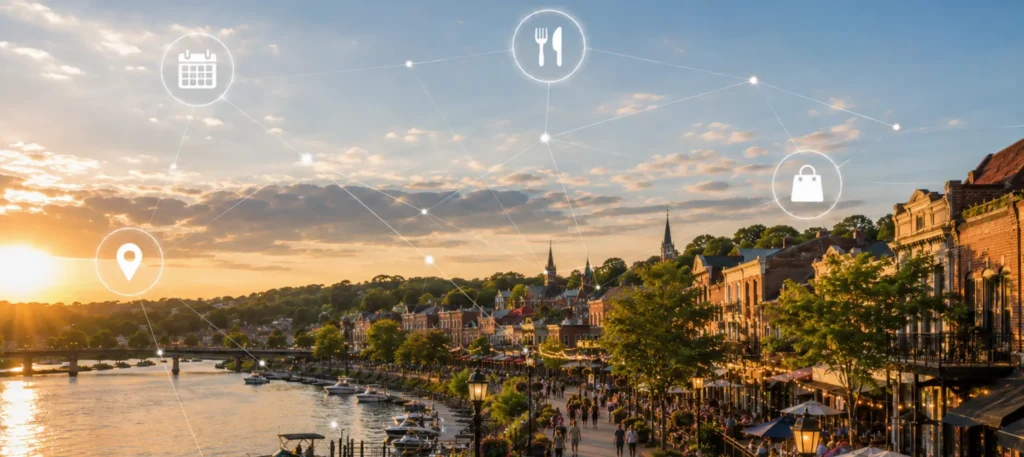
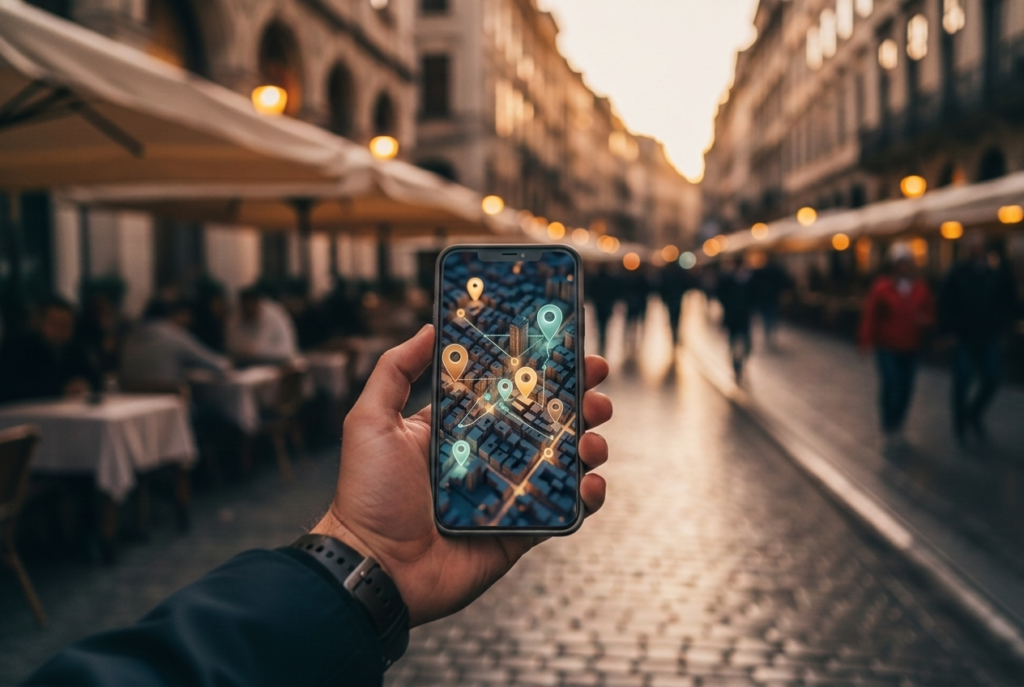
Travelers now expect immediate access to information while they are already inside a destination. They search for nearby restaurants while walking downtown, look for live music during dinner, build itineraries dynamically throughout the day, and check attraction hours in real time.
The modern traveler does not separate trip planning from the trip itself.
Everything happens simultaneously.
This transformed destination websites from informational tools into operational visitor service platforms.
- Event calendars became critical.
- Business listings needed constant updates.
- Interactive maps became essential.
- Mobile responsiveness shifted from a luxury to a requirement.
The visitor center did not disappear. It evolved into the traveler’s pocket. At the same time, tourism organizations gained access to something previous generations of marketers could only imagine: measurable data. For the first time, destinations could analyze website traffic, user engagement, audience demographics, visitor pathways, campaign performance, mobile behavior, and conversion patterns in extraordinary detail. Tourism marketing evolved from a largely creative discipline into a strategic business function supported by measurable insights
Travelers No Longer Want Generic Experiences
Over the past decade, traveler expectations shifted even further. Modern visitors no longer simply ask where they should go. They ask:
- Where can I find authentic experiences?
- What is happening this weekend?
- Where do locals eat?
- What hidden places should I discover?
- What experiences match my lifestyle and interests?
This shift accelerated the growth of experiential travel, culinary tourism, heritage tourism, wellness travel, sports tourism, and outdoor recreation marketing. According to McKinsey & Company, experience-driven travel spending continues to grow significantly as travelers prioritize meaningful and memorable experiences over traditional sightseeing alone.
Destinations adapted by becoming curators of experiences rather than simply promoters of locations.Tourism organizations learned to connect events, attractions, dining, culture, outdoor recreation, and local businesses into complete visitor journeys.
Storytelling became more dynamic.
Personalization became more important.
And destination marketing became more closely connected to community identity.
Artificial Intelligence Is Reshaping Tourism Again
Today, the tourism industry stands at another transformational moment: artificial intelligence. AI-powered search, conversational trip planning, predictive analytics, automated recommendations, and real-time personalization are already changing how travelers discover destinations. Visitors increasingly expect immediate answers instead of endless searches.
Instead of opening ten browser tabs, travelers now ask AI-powered tools questions such as:
“What should I do this weekend in Charleston?”
“Where can I find family-friendly events near the beach?”
“Which small towns in Virginia have great food and walkable downtowns?”
This dramatically changes the responsibility of destination marketing organizations. The quality, structure, accuracy, and consistency of destination content now directly influence how AI systems interpret and recommend places. In many ways, the future of tourism marketing will depend not only on creativity but on trusted and well-governed information.
At the same time, artificial intelligence presents extraordinary opportunities. Tourism organizations can now automate repetitive tasks, improve operational efficiency, personalize visitor experiences at scale, identify trends faster, support lean teams, and create more dynamic digital experiences than ever before.
Smaller destinations now have the ability to compete globally in ways that were unimaginable twenty years ago.

The Best of Times — and the Responsibility That Comes With It
Charles Dickens famously wrote, “It was the best of times, it was the worst of times.” That reflection feels remarkably relevant to tourism marketing today.
These are the best of times because destinations now have more tools than ever to connect with audiences, inspire travel, elevate local stakeholders, measure results, and create meaningful experiences. Tourism organizations can reach global audiences instantly through video, mobile technology, social media, search engines, data analytics, artificial intelligence, and dynamic digital platforms. A destination no longer needs the largest budget to make an impact. Creativity, authenticity, strategy, and consistency can compete at the highest level.
But these are also the most complicated times the industry has ever faced.
There are countless technology providers, software platforms, AI tools, agencies, analytics systems, content services, and marketing vendors competing for attention.
Tourism organizations must carefully evaluate what should be managed internally, what should be outsourced, and which investments genuinely support long-term organizational goals.
Not all technology is equal.
Not all services are built with the destination’s best interests in mind.
And not every platform delivers meaningful value.
Due diligence has become one of the most important responsibilities in modern tourism leadership.
The organizations that will thrive over the next decade will not necessarily be those with the largest budgets. They will be the organizations that make thoughtful decisions, prioritize trusted and dynamic content, invest strategically, and remain focused on both visitor experience and community impact.

The Future of Tourism Marketing Has Never Been More Exciting
As we celebrate National Tourism Month, it is impossible not to feel optimistic about where the industry is heading. The future of tourism marketing will likely include smarter personalization, immersive storytelling, AI-enhanced trip planning, stronger stakeholder collaboration, real-time content ecosystems, and more measurable outcomes than ever before. But perhaps the most exciting part is this:
Technology is finally allowing destinations of all sizes to tell their stories on a global stage. A small coastal town, a rural heritage region, a mountain community, or an emerging downtown district can now reach audiences around the world with authenticity, creativity, and purpose.
The tools will continue to evolve. Platforms will continue to change. Artificial intelligence will continue to reshape digital discovery. But the emotional foundation of tourism will remain timeless.
People travel to feel something. To reconnect. To explore. To celebrate. To discover places that become part of their personal stories.
And that is why tourism marketing continues to matter. Over the past twenty years, the industry has not lost its humanity as technology has evolved. It gained new ways to share it.
Relevant Topics
- Destination marketing evolution
- National Travel and Tourism Week
- AI in tourism marketing
- Tourism marketing trends
- Tourism content strategy
- Travel technology

About The Author: Franci Edgerly
Founder & CEO of ITI Digital, Franci brings over 30 years of experience in the travel industry across both domestic and international markets. Her deep insight and leadership are rooted in a career dedicated to achieving results, driving profitability, and delivering exceptional guest and visitor experiences. This expertise shapes the strategic vision behind ITI Digital and its commitment to innovation in destination marketing